
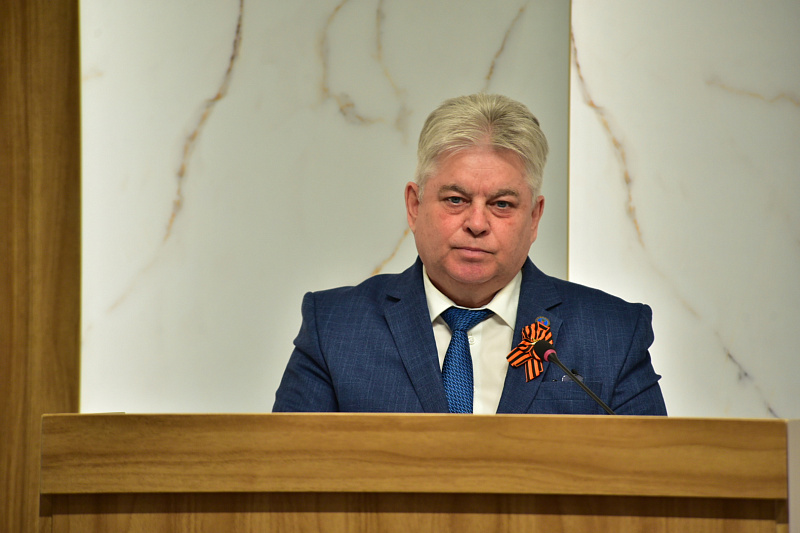
Deputy Head of the Executive Committee Viner Kharisov presented a report on the state of interfaith and interethnic relations in the municipality, emphasizing the importance of systematic work to strengthen friendship between peoples.
“Naberezhnye Chelny is a living organism where fates, languages, ways of life, and beliefs are intertwined. The strength of the city lies not in uniformity, but in the ability to hear each other,” the speaker noted.
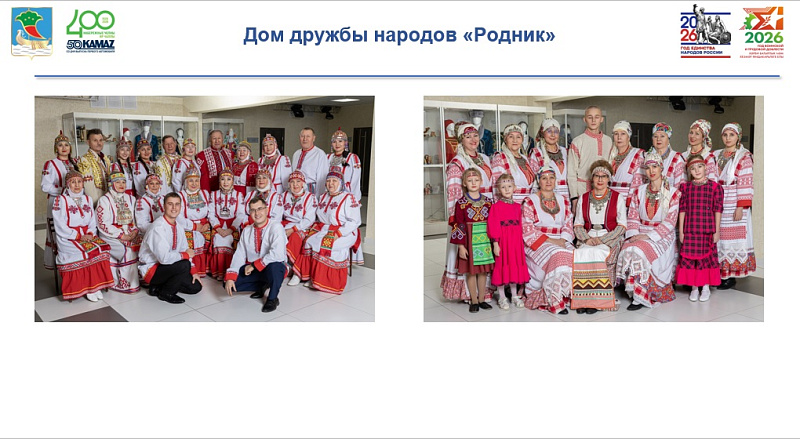
Representatives of more than 80 nationalities live in the city. The key institution for harmonizing relations is the House of Peoples' Friendship “Rodnik”, which hosts 22 national communities. The institution operates 12 folklore groups, 18 amateur associations, and 14 hobby clubs, 10 of which hold the title of “People's”.
Special attention is paid to working with migrants. Meetings with representatives of the Migrant Adaptation Center are held quarterly at “Rodnik”, helping foreign citizens to successfully integrate into society.
“Harmony is not given once and for all. It requires daily labor – patience, readiness to listen, courage to admit one's mistake, and wisdom not to perceive someone else's as hostile,” Viner Kharisov emphasized.
Mayor Nail Magdeev, referring to the history of the city's formation, noted that during the construction of КАМАЗ, Naberezhnye Chelny turned into a multinational center in a short time: representatives of more than eighty nationalities and ethnic groups arrived here with their own languages, habits, customs, and traditions. The Mayor stated that Naberezhnye Chelny already has a rich experience in achieving interethnic and interfaith harmony, mutual understanding, mutual assistance, and support, and pointed to the existence of a favorable environment in the city for the adaptation of foreign specialists arriving in Naberezhnye Chelny.
Nail Magdeev proposed holding a meeting with representatives of national communities at the House of Peoples' Friendship “Rodnik” in early June: “We will once again substantively consider the issues that require our attention. We will invite our specialists from КАМАЗ – they are working very effectively in this direction. They have accumulated practical experience: many enterprises can confirm that if a person is occupied with decent work, if they are entrusted with a social burden, and provided with fair wages, then 70% of adaptation issues are already solved. Our task is to seek approaches to strengthen and develop what has already been done and laid down by our predecessors, especially in modern conditions.”